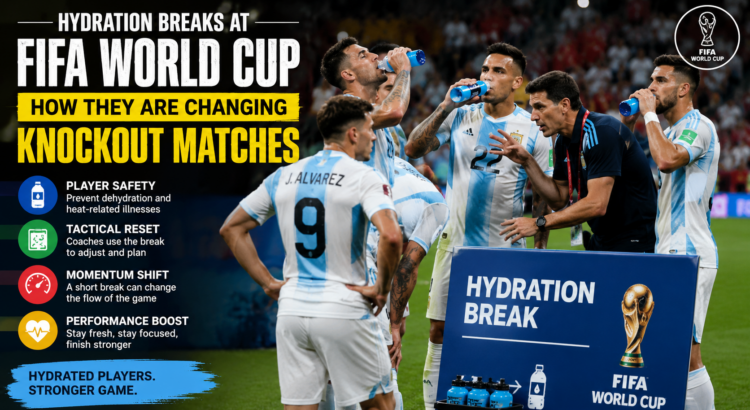
Hydration Breaks at the FIFA World Cup: How They Are Changing Knockout Matches
The FIFA World Cup has always been a stage where tactics, fitness, and mental strength determine who advances and who goes home. In recent tournaments, however, one additional factor has started influencing the flow of knockout matches—hydration breaks. Initially introduced to protect players competing in extreme heat and humidity, these scheduled pauses have evolved into important tactical moments that can reshape the outcome of high-pressure games.
While the primary purpose of hydration breaks is player welfare, coaches, players, and fans have increasingly recognized their strategic value. From altering momentum to allowing tactical adjustments, these brief interruptions can have a lasting impact on the biggest matches in international football.
Why Hydration Breaks Are Necessary
Football is one of the most physically demanding sports in the world. During a World Cup knockout match, players can cover more than 10 kilometers while repeatedly sprinting, pressing, and changing direction. When matches are played in high temperatures or humid conditions, the physical strain becomes even greater.
Hydration breaks are designed to help players:
- Replace lost fluids.
- Reduce the risk of heat-related illnesses.
- Improve concentration during long matches.
- Maintain physical performance in challenging weather.
Medical experts have consistently emphasized that dehydration can reduce reaction time, decision-making, and endurance. In knockout football, even a slight decline in performance can prove decisive.
More Than Just a Water Break
Although hydration breaks usually last only a few minutes, they often resemble mini team talks.
Managers use the opportunity to:
- Adjust formations.
- Correct defensive mistakes.
- Change pressing intensity.
- Discuss set-piece strategies.
- Calm players after periods of sustained pressure.
Unlike substitutions, which change personnel, hydration breaks allow coaches to reorganize the entire team’s approach without interrupting the match significantly.
This has made the breaks an increasingly important tactical tool during World Cup knockout fixtures.
Momentum Can Change in Minutes
One of the biggest debates surrounding hydration breaks is their effect on momentum.
Football is heavily influenced by rhythm. Teams dominating possession or creating repeated chances often rely on maintaining continuous pressure. A scheduled break can interrupt that flow and give struggling opponents valuable time to regroup.
For example, if one team has spent 15 minutes defending deep under constant pressure, a hydration break provides:
- Time to recover physically.
- An opportunity to reorganize defensively.
- A chance for the coaching staff to identify weaknesses.
When play resumes, the momentum may shift dramatically.
Conversely, teams already controlling the match can use the pause to refine their attacking approach and ensure concentration levels remain high.
A Bigger Factor During Knockout Matches
Group-stage matches allow room for recovery after a poor result. Knockout matches do not.
Every tactical decision carries greater importance because a single mistake can end a nation’s World Cup campaign.
Hydration breaks become especially valuable because coaches can:
- Prepare for extra time.
- Manage player fatigue.
- Reduce unnecessary pressing.
- Plan substitution strategies.
- Reinforce defensive discipline.
Since knockout matches frequently extend beyond 90 minutes, conserving energy becomes almost as important as creating scoring chances.
The Role of Sports Science
Modern football relies heavily on sports science.
Teams monitor player workload using GPS tracking, heart-rate monitors, and performance data. Hydration strategies are now tailored for individual players based on:
- Sweat rate.
- Temperature.
- Humidity.
- Playing position.
- Physical workload.
Sports scientists work alongside medical staff to determine how much fluid and electrolytes each player requires throughout a match.
These small details help players maintain peak performance when every sprint and tackle matters.
Tactical Communication Has Improved
International managers spend limited time working with national teams compared to club football. Every opportunity for communication is valuable.
Hydration breaks provide a legal opportunity for:
- Tactical reminders.
- Leadership discussions.
- Motivation.
- Clarifying defensive assignments.
Captains also play an important role by ensuring teammates understand the revised game plan before play resumes.
Critics Still Raise Concerns
Despite the obvious health benefits, hydration breaks have attracted criticism.
Some supporters believe they interrupt the natural rhythm of football, especially when one team has built strong attacking momentum.
Others argue that broadcasters may benefit from the additional pause because it creates a convenient window for television coverage and advertisements.
However, football’s governing bodies have consistently maintained that player safety remains the primary reason for introducing hydration breaks during extreme weather conditions.
Could Hydration Breaks Become Permanent?
As climate conditions become increasingly unpredictable and international tournaments expand into regions with challenging weather, hydration breaks may become a more common feature of elite football.
Future tournaments could see even greater emphasis on:
- Heat monitoring.
- Player recovery.
- Medical protocols.
- Environmental safety standards.
Rather than being viewed as interruptions, hydration breaks may eventually become a standard part of modern football whenever conditions require them.
Final Thoughts
Hydration breaks have become much more than short pauses for players to drink water. They now represent a unique blend of sports science, tactical planning, and player welfare. In FIFA World Cup knockout matches, where every decision can define a nation’s journey, these brief intervals often provide the opportunity to reset, rethink, and respond.
Whether they shift momentum, improve player safety, or allow coaches to make crucial tactical adjustments, hydration breaks have established themselves as an important element of the modern game. As football continues to evolve alongside advances in sports science and changing climate conditions, their influence is likely to grow even further.
Frequently Asked Questions (FAQs)
Why are hydration breaks used during the FIFA World Cup?
Hydration breaks help players stay safe and maintain performance when matches are played in high temperatures or humid conditions.
Do hydration breaks affect match momentum?
Yes. They can interrupt a team’s attacking rhythm while giving opponents time to recover physically and reorganize tactically.
Can coaches give instructions during hydration breaks?
Yes. Coaches often use the break to communicate tactical changes, motivate players, and prepare for the remainder of the match.
Are hydration breaks mandatory?
They are typically introduced when weather conditions meet specific heat-related safety thresholds set by competition organizers and match officials.
Do hydration breaks help reduce injuries?
While they cannot eliminate injuries entirely, they reduce the risk of heat stress, dehydration, and fatigue-related performance decline.