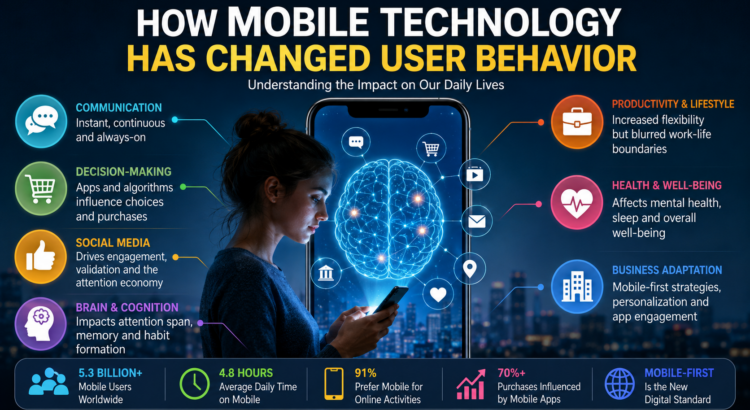
How Mobile Technology Has Changed User Behavior
Mobile technology has fundamentally reshaped how people think, communicate, shop, learn, and even how they process information. From simple phone calls and SMS to AI-powered apps and always-on connectivity, smartphones have become an extension of human behavior rather than just a communication device. Research from sources like BBC Future and peer-reviewed studies shows that this shift is not only behavioral but also cognitive.
In this article, we explore how mobile technology has changed user behavior, its psychological impact, and how businesses are adapting to this mobile-first world.
The Rise of Mobile-First Behavior
The shift from desktop to mobile did not happen overnight. It evolved as smartphones became affordable, internet access expanded, and apps became central to digital life.
According to insights on mobile behavior trends and app usage patterns, users now prefer mobile devices for almost every online activity—from browsing and shopping to banking and entertainment. Deloitte Digital Mobile App Best Practices
Today, mobile devices are often the first and last thing people interact with each day, shaping habits around constant connectivity.
How Mobile Phones Have Changed the Human Brain
One of the most discussed impacts of mobile technology is its effect on attention span, memory, and cognitive processing. Studies suggest that frequent smartphone use can alter how we focus and retain information.
Research published on medical databases highlights how digital devices influence brain activity, particularly in areas related to attention and reward systems. NCBI Study on Smartphone Cognitive Impact
BBC Future also explains that smartphones have created a habit loop of checking notifications, which trains the brain to seek constant stimulation. BBC Future on Cellphones and Brain Behavior
Over time, this leads to:
- Reduced attention span
- Increased multitasking behavior
- Dependency on instant information
- Habitual checking of devices
Communication Has Become Instant and Continuous
Before mobile phones, communication was structured and time-bound. Today, it is instant, continuous, and often fragmented.
Messaging apps, social media platforms, and video calls have replaced traditional communication methods. People now expect immediate responses, which has changed social norms significantly.
Key behavioral shifts include:
- Preference for texting over calling
- Shorter, more frequent conversations
- Increased use of emojis and visual communication
- Constant social presence expectations
This shift has made communication faster but sometimes less deep and more reactive.
Mobile Apps Have Changed Decision-Making
Mobile apps are designed to influence user behavior through personalization, notifications, and recommendations. Businesses use behavioral design to increase engagement and retention.
According to digital strategy research, successful apps focus on simplicity, speed, and personalization to keep users engaged. Deloitte Digital Mobile App Insights
This has led to new behavioral patterns:
- Impulse buying through mobile shopping apps
- Algorithm-driven content consumption
- Reduced patience for slow-loading websites
- Increased reliance on app-based services (food, travel, banking)
Social Media and the Attention Economy
Mobile technology has amplified the growth of social media platforms, which are built around engagement and retention.
Users now consume content in short bursts through reels, stories, and feeds. This has created what experts call the “attention economy,” where user attention is the most valuable currency.
Behavioral impacts include:
- Doomscrolling (endless content consumption)
- Validation-seeking through likes and comments
- Comparison-driven behavior
- Reduced long-form content consumption
Impact on Productivity and Lifestyle
Mobile technology has blurred the boundaries between work and personal life. Remote work tools, emails, and collaboration apps ensure that users are always connected.
Positive impacts:
- Increased flexibility in work
- Better time management through productivity apps
- Easy access to learning resources
Negative impacts:
- Work-life imbalance
- Digital fatigue
- Constant notification stress
Health and Psychological Effects
Excessive mobile usage has also raised concerns about mental health and well-being. Studies indicate links between high screen time and anxiety, sleep disruption, and reduced face-to-face interaction.
However, mobile technology also provides mental health benefits through meditation apps, telehealth services, and support communities.
How Businesses Are Adapting to Mobile Behavior
Companies are redesigning their digital strategies to match mobile-first behavior. Key adaptations include:
- Mobile-first website design
- App-based customer engagement
- Push notification marketing
- AI-driven personalization
Organizations that fail to adapt often lose user engagement and conversion opportunities.
FAQs
1. How has mobile technology changed human behavior?
Mobile technology has made communication instant, increased screen dependency, and changed how people consume information and make decisions.
2. Does mobile usage affect attention span?
Yes, frequent notifications and multitasking can reduce attention span and increase distraction levels.
3. Are smartphones addictive?
Smartphones can create habitual usage patterns due to dopamine-driven feedback loops from notifications and social media.
4. What is mobile-first behavior?
It refers to users preferring smartphones over desktops for browsing, shopping, communication, and entertainment.
5. Can mobile technology have positive effects?
Yes, it improves connectivity, productivity, learning access, and provides tools for health and well-being.
Final Thought
Mobile technology is no longer just a tool—it has become a behavioral framework shaping how humans interact with the world. While it brings convenience, speed, and accessibility, it also introduces challenges related to attention, mental health, and digital dependency.
The key is not to resist mobile technology but to use it consciously. Understanding its influence on behavior helps users and businesses make smarter, more balanced decisions in a mobile-driven world.