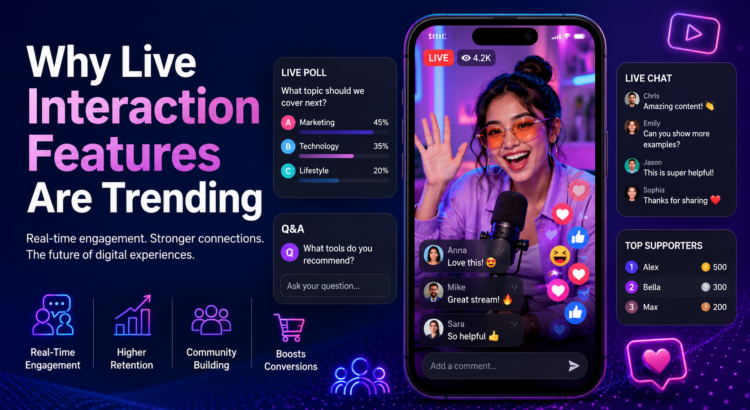
Why Live Interaction Features Are Trending in Digital Entertainment
In the last few years, the way people consume online content has changed dramatically. Audiences are no longer satisfied with simply watching videos or reading posts. They want to participate, react, vote, comment, and influence experiences in real time. This shift has pushed live interaction features to the center of digital entertainment, streaming platforms, gaming, sports broadcasts, and online events.
From live polls and instant reactions to interactive chats and virtual experiences, live interaction has become one of the biggest trends shaping modern content consumption. Businesses, creators, and streaming platforms are increasingly investing in these features because they improve engagement, build communities, and keep audiences connected longer.
What Are Live Interaction Features?
Live interaction features are tools that allow audiences to actively engage with content while it is happening. Unlike traditional media where viewers remain passive, these features create two-way communication.
Common examples include:
- Live chat during streams
- Polls and audience voting
- Real-time Q&A sessions
- Emoji reactions and virtual gifts
- Interactive quizzes
- Clickable overlays
- Multi-user live experiences
- AR and VR integrations
These tools transform viewers into participants instead of spectators.
Why Are Live Interaction Features Becoming So Popular?
1. People Want Real-Time Experiences
Modern audiences value immediacy. Watching events unfold live creates excitement because anything can happen. This unpredictability generates emotional engagement that pre-recorded content often cannot match.
The fear of missing out (FOMO) also plays a major role. Users stay connected because they want to participate in trending conversations or live moments before they disappear.
When viewers feel part of an event, they are more likely to remain engaged and return for future experiences.
2. Interactive Content Increases Engagement
Studies and industry observations show interactive formats produce stronger engagement compared to static content. Features such as polls, reactions, and live discussions encourage users to actively participate rather than passively consume.
Higher engagement often means:
- Longer viewing sessions
- More comments and shares
- Better retention rates
- Increased loyalty to creators or brands
This is one reason why streaming platforms continue adding new interactive capabilities.
3. Algorithms Reward Interactive Content
Social platforms prioritize content that generates immediate engagement. Posts or streams receiving quick reactions, comments, and shares are often pushed to larger audiences.
Because live interaction encourages fast engagement, creators and brands gain improved visibility. This creates a cycle where interactive content performs better and becomes even more common.
4. Community Building Has Become Essential
One major advantage of live interaction is community creation. Viewers are not only interacting with hosts but also with one another.
This creates:
- Stronger audience loyalty
- Shared experiences
- Ongoing discussions
- Higher trust levels
Communities formed around interactive experiences often become long-term supporters of creators, businesses, and streaming platforms.
5. AI Is Making Live Interaction Smarter
Artificial intelligence is changing how interactive experiences work. AI tools can analyse viewer behaviour, personalize recommendations, automate responses, and improve moderation during live streams.
Examples include:
- AI Chabot’s answering audience questions instantly
- Personalized content suggestions
- Dynamic adjustments based on audience preferences
These improvements make interactions feel more relevant and engaging.
The Rise of AR and VR in Interactive Streaming
Augmented Reality (AR) and Virtual Reality (VR) are expanding the possibilities of live interaction. Instead of simply watching content, users can immerse themselves inside experiences.
Potential applications include:
- Virtual concerts
- Interactive sports viewing
- Digital shopping experiences
- Immersive educational events
Advanced technologies are making entertainment more personalized than ever before.
Live Shopping Is Changing Online Commerce
Live commerce combines streaming with shopping. Hosts demonstrate products while audiences ask questions and purchase instantly.
This trend is growing because it offers:
- Real-time product demonstrations
- Immediate customer feedback
- Increased trust
- Faster purchasing decisions
Interactive shopping experiences are becoming a major revenue source for brands worldwide.
Low Latency Is Driving Better Experiences
Faster internet and low-latency streaming technologies are making real-time interaction smoother. Reduced delay means viewers can respond instantly during sports events, gaming streams, and online broadcasts.
As technology improves, seamless interaction will become the standard expectation.
Industries Benefiting Most from Live Interaction Features
Several sectors are rapidly adopting interactive technologies:
Entertainment
Interactive shows, live voting, and audience participation increase retention.
Sports
Viewers can access multiple perspectives, live statistics, and personalized viewing options.
Education
Live sessions with instant feedback improve learning experiences.
E-commerce
Real-time product demonstrations help boost conversions.
Corporate Events
Interactive webinars increase attendee participation and engagement.
Challenges of Interactive Experiences
Despite growth, live interaction also creates challenges:
- Moderating harmful comments
- Managing technical issues
- Maintaining privacy and security
- Balancing engagement with authenticity
Successful platforms must address these issues while preserving user experience.
Final Thoughts
Live interaction features are trending because they satisfy a fundamental human desire: connection. People want experiences that feel immediate, personal, and participatory. Whether through live chats, AI-driven recommendations, immersive AR experiences, or interactive shopping, audiences increasingly expect to engage rather than simply watch.
As technology continues evolving, live interaction will likely become a core component of digital experiences across entertainment, commerce, education, and beyond. The future belongs to platforms that make users feel involved, heard, and connected in real time.
FAQs
1. Why are live interaction features important?
They improve audience engagement, increase retention, and create stronger communities around content.
2. What are examples of live interaction tools?
Examples include live chat, polls, reactions, quizzes, Q&A sessions, and clickable overlays.
3. How does AI improve live interaction?
AI personalizes content, powers chatbots, analyses viewer behaviour, and improves moderation.
4. Why is live shopping becoming popular?
It combines entertainment with purchasing, allowing viewers to ask questions and buy products instantly.
5. Will interactive content dominate future entertainment? Current trends suggest interactive and immersive experiences will continue growing as audiences seek deeper engagement.