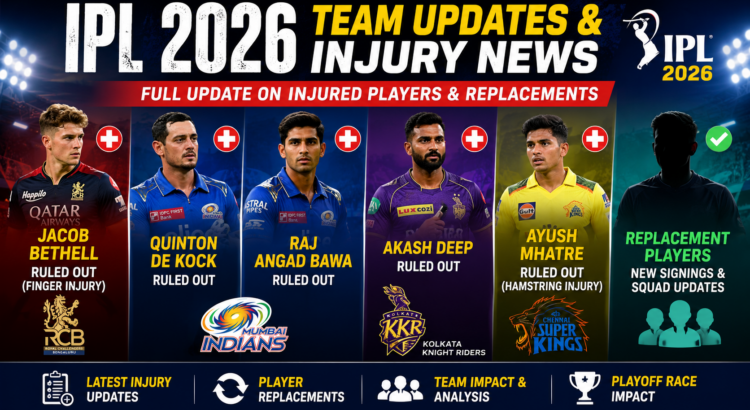
IPL 2026 players injury updates and latest team replacement news for RCB MI KKR and CSK

IPL 2026 Team Updates & Injury News: Full Analysis of Latest Player Replacements and Squad Changes

IPL 2026 Team Updates & Injury News: Full Analysis of Latest Player Replacements and Squad Changes

The excitement of the Indian Premier League 2026 has been matched by a growing list of injuries and sudden squad changes. As the tournament moves toward the playoff stage, several franchises are struggling with unavailable players, forcing teams to rethink combinations, balance, and match strategies. From major injuries to last-minute replacements, IPL 2026 has become a true test of squad depth and adaptability.

Many teams including Royal Challengers Bengaluru, Mumbai Indians, Kolkata Knight Riders, and Chennai Super Kings have suffered major setbacks due to injuries to key players. These changes could directly impact playoff qualification and title chances.

Jacob Bethell Injury Gives Big Blow to RCB

One of the biggest injury stories of IPL 2026 is the absence of young England all-rounder Jacob Bethell. The talented batter suffered a finger injury while fielding during a match for RCB and has now been ruled out of the remainder of the tournament. Reports suggest he injured his left ring finger while trying to stop a boundary.

This injury has created a major headache for RCB ahead of the playoffs. Bethell was considered an important backup opener and a flexible middle-order option. His absence increases pressure on senior players like Virat Kohli and the returning overseas batters.

Fans on Reddit also reacted emotionally to the news, with many discussing how RCB’s opening combination could change after Bethell’s exit.

The injury may also affect England’s future international plans, as selectors are reportedly monitoring his recovery closely before upcoming Test matches.

Mumbai Indians Suffer Double Injury Setback

Five-time champions Mumbai Indians have also faced serious injury concerns. Star wicketkeeper-batter Quinton de Kock and all-rounder Raj Angad Bawa have both been ruled out of IPL 2026.

To deal with these absences, Mumbai Indians signed Mahipal Lomror and Ruchit Ahir as replacement players. These additions are expected to strengthen MI’s squad depth during the crucial final phase of the league stage.

However, replacing an experienced international player like de Kock is never easy. Mumbai Indians may now rely more heavily on their Indian batting core and bowling attack to stay competitive in pressure matches.

KKR’s Fast Bowling Crisis Continues

Kolkata Knight Riders are currently dealing with one of the worst injury situations in IPL 2026. Indian pacer Akash Deep has officially been ruled out of the season, adding more pressure on KKR’s bowling unit.

Earlier reports also mentioned injury concerns around fast bowlers like Harshit Rana and Matheesha Pathirana.

In response, KKR signed wicketkeeper-batter Luvnith Sisodia as a replacement ahead of an important clash against Delhi Capitals.

The bowling injuries have forced KKR to constantly rotate players and change strategies. While their batting lineup remains strong, the lack of consistent bowling options could hurt their playoff ambitions.

Chennai Super Kings Face Young Talent Injury Problems

Chennai Super Kings have also suffered setbacks this season. Young batter Ayush Mhatre has been ruled out due to a hamstring injury sustained during a match against Sunrisers Hyderabad.

The injury is expected to keep him out for several weeks, ending his IPL 2026 campaign. For a team already rebuilding its squad with younger players, this is a disappointing development.

CSK fans on Reddit have even joked about creating an “injured XI” because of the growing number of unavailable players in the squad.

Apart from the headline injuries, several other franchises have also been affected:

The franchise now faces the challenge of maintaining consistency while balancing experienced veterans and inexperienced replacements.

Other Major IPL 2026 Injury Updates

  • Sunrisers Hyderabad reportedly dealt with injuries to overseas players before the season started.
  • Punjab Kings have monitored fitness concerns around key fast bowlers.
  • Lucknow Super Giants were linked with concerns over Wanindu Hasaranga and possible replacement discussions.
  • Several England and South African players are also facing availability issues because of international cricket schedules and fitness management.

These developments highlight how modern franchise cricket is heavily affected by workload management, international commitments, and injury recovery timelines.

How Injuries Are Changing IPL 2026

Injuries are not just removing star players from teams — they are completely changing tournament dynamics. Teams with strong bench strength are surviving, while others are struggling to maintain balance.

Franchises now depend more on:

  • Backup overseas players
  • Domestic uncapped talent
  • Flexible batting orders
  • Smart replacement signings
  • Workload management

The ability to adapt quickly has become just as important as having superstar cricketers.

Interestingly, recent cricket research also suggests that optimized team combinations and player rotations can significantly improve win probability in T20 leagues.

FAQs

Which IPL team has suffered the most injuries in 2026?

Kolkata Knight Riders and Mumbai Indians are among the most affected teams due to multiple bowling and squad injuries.

Why is Jacob Bethell out of IPL 2026?

Jacob Bethell suffered a finger injury while fielding during an IPL match for RCB and has been ruled out of the tournament.

Who replaced Quinton de Kock in Mumbai Indians?

Mumbai Indians signed Mahipal Lomror as one of the replacement players after Quinton de Kock was ruled out.

Is Ayush Mhatre ruled out of IPL 2026?

Yes, Ayush Mhatre has been ruled out because of a hamstring injury.

How do injuries affect IPL teams?

Injuries force teams to change playing combinations, depend on replacements, and adjust tactical strategies during the tournament.

Final Thoughts

IPL 2026 has clearly shown that injuries can completely reshape a team’s season. While star players attract attention, tournaments are often won by franchises that manage pressure, squad rotation, and replacement strategies effectively.

Teams like Royal Challengers Bengaluru, Mumbai Indians, and Kolkata Knight Riders now face crucial decisions as the playoffs approach. With every match becoming more important, squad fitness may ultimately decide who lifts the IPL 2026 trophy.
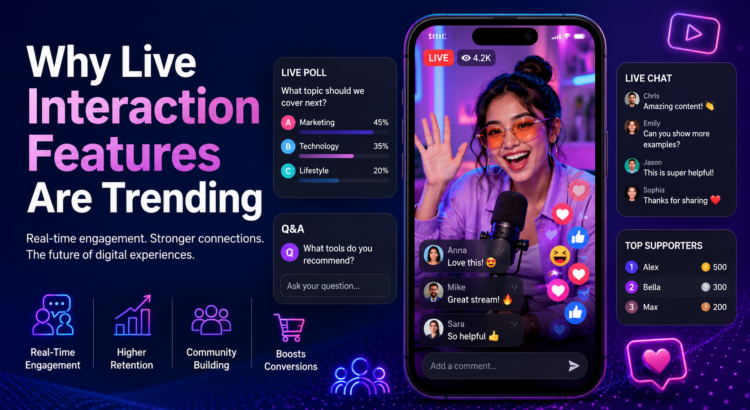
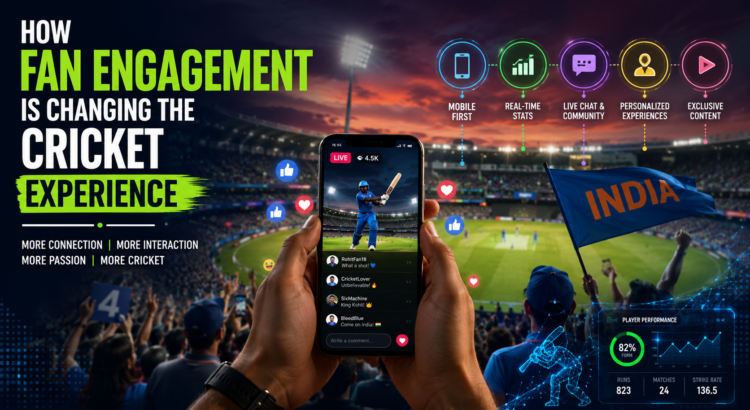
Illustration showing people engaging with live streaming, chats, polls, and interactive digital experiences in real time.

Why Live Interaction Features Are Trending in Digital Entertainment

Why Live Interaction Features Are Trending in Digital Entertainment

In the last few years, the way people consume online content has changed dramatically. Audiences are no longer satisfied with simply watching videos or reading posts. They want to participate, react, vote, comment, and influence experiences in real time. This shift has pushed live interaction features to the center of digital entertainment, streaming platforms, gaming, sports broadcasts, and online events.

From live polls and instant reactions to interactive chats and virtual experiences, live interaction has become one of the biggest trends shaping modern content consumption. Businesses, creators, and streaming platforms are increasingly investing in these features because they improve engagement, build communities, and keep audiences connected longer.

What Are Live Interaction Features?

Live interaction features are tools that allow audiences to actively engage with content while it is happening. Unlike traditional media where viewers remain passive, these features create two-way communication.

Common examples include:

  • Live chat during streams
  • Polls and audience voting
  • Real-time Q&A sessions
  • Emoji reactions and virtual gifts
  • Interactive quizzes
  • Clickable overlays
  • Multi-user live experiences
  • AR and VR integrations

These tools transform viewers into participants instead of spectators.

Why Are Live Interaction Features Becoming So Popular?

1. People Want Real-Time Experiences

Modern audiences value immediacy. Watching events unfold live creates excitement because anything can happen. This unpredictability generates emotional engagement that pre-recorded content often cannot match.

The fear of missing out (FOMO) also plays a major role. Users stay connected because they want to participate in trending conversations or live moments before they disappear.

When viewers feel part of an event, they are more likely to remain engaged and return for future experiences.

2. Interactive Content Increases Engagement

Studies and industry observations show interactive formats produce stronger engagement compared to static content. Features such as polls, reactions, and live discussions encourage users to actively participate rather than passively consume.

Higher engagement often means:

  • Longer viewing sessions
  • More comments and shares
  • Better retention rates
  • Increased loyalty to creators or brands

This is one reason why streaming platforms continue adding new interactive capabilities.

3. Algorithms Reward Interactive Content

Social platforms prioritize content that generates immediate engagement. Posts or streams receiving quick reactions, comments, and shares are often pushed to larger audiences.

Because live interaction encourages fast engagement, creators and brands gain improved visibility. This creates a cycle where interactive content performs better and becomes even more common.

4. Community Building Has Become Essential

One major advantage of live interaction is community creation. Viewers are not only interacting with hosts but also with one another.

This creates:

  • Stronger audience loyalty
  • Shared experiences
  • Ongoing discussions
  • Higher trust levels

Communities formed around interactive experiences often become long-term supporters of creators, businesses, and streaming platforms.

5. AI Is Making Live Interaction Smarter

Artificial intelligence is changing how interactive experiences work. AI tools can analyse viewer behaviour, personalize recommendations, automate responses, and improve moderation during live streams.

Examples include:

  • AI Chabot’s answering audience questions instantly
  • Personalized content suggestions
  • Dynamic adjustments based on audience preferences

These improvements make interactions feel more relevant and engaging.

The Rise of AR and VR in Interactive Streaming

Augmented Reality (AR) and Virtual Reality (VR) are expanding the possibilities of live interaction. Instead of simply watching content, users can immerse themselves inside experiences.

Potential applications include:

  • Virtual concerts
  • Interactive sports viewing
  • Digital shopping experiences
  • Immersive educational events

Advanced technologies are making entertainment more personalized than ever before.

Live Shopping Is Changing Online Commerce

Live commerce combines streaming with shopping. Hosts demonstrate products while audiences ask questions and purchase instantly.

This trend is growing because it offers:

  • Real-time product demonstrations
  • Immediate customer feedback
  • Increased trust
  • Faster purchasing decisions

Interactive shopping experiences are becoming a major revenue source for brands worldwide.

Low Latency Is Driving Better Experiences

Faster internet and low-latency streaming technologies are making real-time interaction smoother. Reduced delay means viewers can respond instantly during sports events, gaming streams, and online broadcasts.

As technology improves, seamless interaction will become the standard expectation.

Industries Benefiting Most from Live Interaction Features

Several sectors are rapidly adopting interactive technologies:

Entertainment

Interactive shows, live voting, and audience participation increase retention.

Sports

Viewers can access multiple perspectives, live statistics, and personalized viewing options.

Education

Live sessions with instant feedback improve learning experiences.

E-commerce

Real-time product demonstrations help boost conversions.

Corporate Events

Interactive webinars increase attendee participation and engagement.

Challenges of Interactive Experiences

Despite growth, live interaction also creates challenges:

  • Moderating harmful comments
  • Managing technical issues
  • Maintaining privacy and security
  • Balancing engagement with authenticity

Successful platforms must address these issues while preserving user experience.

Final Thoughts

Live interaction features are trending because they satisfy a fundamental human desire: connection. People want experiences that feel immediate, personal, and participatory. Whether through live chats, AI-driven recommendations, immersive AR experiences, or interactive shopping, audiences increasingly expect to engage rather than simply watch.

As technology continues evolving, live interaction will likely become a core component of digital experiences across entertainment, commerce, education, and beyond. The future belongs to platforms that make users feel involved, heard, and connected in real time.

FAQs

1. Why are live interaction features important?

They improve audience engagement, increase retention, and create stronger communities around content.

2. What are examples of live interaction tools?

Examples include live chat, polls, reactions, quizzes, Q&A sessions, and clickable overlays.

3. How does AI improve live interaction?

AI personalizes content, powers chatbots, analyses viewer behaviour, and improves moderation.

4. Why is live shopping becoming popular?

It combines entertainment with purchasing, allowing viewers to ask questions and buy products instantly.

5. Will interactive content dominate future entertainment? Current trends suggest interactive and immersive experiences will continue growing as audiences seek deeper engagement.

Fans engaging with cricket on digital platforms live

How Fan Engagement is Changing the Cricket Experience in the Digital Era

How Fan Engagement is Changing the Cricket Experience in the Digital Era

Cricket has always been more than just a sport—it is an emotion for millions of fans across the world. However, the way fans engage with cricket has changed dramatically in the last decade. With the rise of digital platforms, artificial intelligence, and real-time data, the relationship between fans and the game has become more interactive, personalized, and immersive than ever before.

Today, fans don’t just watch cricket; they participate in it, react to it instantly, and even influence how content is created around it. Let’s explore how this transformation is reshaping the cricket experience.

The Shift from Passive Viewing to Active Engagement

Earlier, cricket fans were limited to watching matches on television or listening on radio. Engagement was one-way. But now, digital platforms have turned viewers into active participants.

Fans can:

  • Comment live during matches
  • Vote in polls
  • Share opinions on social media
  • Access real-time stats and analytics

According to insights shared in modern cricket engagement studies, digital interaction has made fans feel like they are part of the match experience rather than just spectators.

Exploring changing cricket engagement trends

This shift has made cricket more community-driven, where discussions around matches often become as important as the matches themselves.

Role of AI and Cloud in Enhancing Fan Experience

Technology giants like Microsoft are playing a major role in transforming how cricket organizations engage with fans. Modern cricket boards are now using AI, machine learning, and cloud computing to deliver personalized and real-time experiences.

For example, Cricket Australia has adopted digital tools powered by AI to improve fan engagement at both grassroots and elite levels.

These technologies help in:

  • Delivering personalized match highlights
  • Predicting fan preferences
  • Enhancing streaming quality
  • Offering interactive mobile app experiences

Cricket Australia AI and cloud fan experience innovation

As a result, fans now receive content that is tailored specifically to their interests, whether it is player stats, favorite teams, or match moments.

Rise of Social Media and Real-Time Conversations

Social media has become the heartbeat of modern cricket fandom. Platforms like X (Twitter), Instagram, and YouTube allow fans to engage in real time during matches.

Key changes include:

  • Instant match reactions through memes and posts
  • Player-fan direct interaction
  • Viral highlights and short-form video content
  • Live discussions during key moments

This instant communication has created a second layer of the cricket experience—one that runs parallel to the match itself.

Fans are no longer just watching a game; they are part of a global conversation that evolves ball by ball.

Data-Driven Fan Personalization

Another major shift in fan engagement is personalization. Cricket platforms now collect and analyze fan behavior to deliver customized experiences.

Examples include:

  • Personalized notifications for favorite teams
  • Recommended highlight reels
  • Tailored news feeds
  • Fantasy cricket suggestions based on player form

This is made possible through advanced analytics systems that track user preferences and engagement patterns. The result is a more engaging and relevant experience for each fan.

Grassroots to Elite: Expanding the Cricket Ecosystem

Fan engagement is no longer limited to international matches. Digital transformation has expanded cricket’s reach from grassroots level tournaments to elite international competitions.

Organizations are now investing in:

  • Local streaming of amateur matches
  • Youth engagement programs online
  • Digital coaching platforms
  • Community-based cricket apps

This creates a stronger cricket ecosystem where fans can follow players from early stages of their careers to international fame.

LinkedIn cricket fan engagement primer

This approach strengthens long-term loyalty and deepens emotional connections with the sport.

Immersive Technologies: The Future of Engagement

The future of cricket engagement is moving toward immersive experiences powered by technologies like:

  • Augmented Reality (AR)
  • Virtual Reality (VR)
  • 360-degree live streaming
  • Interactive match simulations

These innovations will allow fans to feel like they are inside the stadium, even while watching from home. Imagine choosing different camera angles, accessing real-time player biometrics, or even simulating match outcomes.

This level of immersion will redefine what it means to “watch cricket.”

Monetization Through Engagement

As fan engagement increases, new monetization models are also emerging:

  • Subscription-based premium content
  • In-app purchases for fantasy sports
  • Sponsored interactive ads
  • Exclusive digital collectibles (NFTs in some cases)

Engaged fans are more likely to invest in experiences that enhance their connection with the sport, creating new revenue streams for cricket boards and media companies.

FAQs

1. How has fan engagement changed cricket?

Fan engagement has shifted from passive viewing to interactive participation through social media, apps, and real-time digital platforms.

2. What role does AI play in cricket fan engagement?

AI helps deliver personalized content, improve streaming quality, and analyze fan behavior for better user experiences.

3. How is Cricket Australia using technology?

They are using cloud computing and AI to enhance fan experiences from grassroots to elite cricket levels.

4. Why is social media important for cricket fans?

Social media allows instant interaction, live reactions, and global conversations during matches, making the experience more engaging.

5. What is the future of cricket fan engagement?

The future includes AR, VR, and immersive technologies that will allow fans to experience matches in highly interactive ways.

Final Thought

Fan engagement in cricket is no longer just about watching a match—it is about experiencing it in real time, interacting with it, and personalizing it. With the integration of AI, cloud computing, and digital platforms led by companies like Microsoft and cricket organizations like Cricket Australia, the sport is entering a new era. As technology continues to evolve, cricket will become even more immersive, data-driven, and fan-centric, ensuring that the connection between the game and its supporters grows stronger than ever before.