
Football academy training young players on the field FC

Role of Academies in Player Development: Building the Future of Modern Football

Role of Academies in Player Development

In modern football, success is no longer dependent only on big transfers or experienced professionals. The real foundation of long-term success lies in football academies, which play a crucial role in identifying, nurturing, and developing young talent into professional players. Clubs like Manchester United, Liverpool, and others have shown that a strong academy system can consistently produce first-team players who understand the club’s philosophy and playing style.

Academies are not just training centers; they are structured development environments that focus on technical skills, tactical awareness, physical conditioning, and psychological growth. According to global football development models, elite academies operate through structured pathways such as Foundation Phase, Youth Development Phase, and Professional Development Phase to ensure smooth progression of players .

What is a Football Academy?

A football academy is a structured youth development system within a club that trains players from a very young age (sometimes as early as 5–6 years old) and prepares them for professional football.

The goal is not only to develop football skills but also to create well-rounded individuals who can handle pressure, competition, and lifestyle changes associated with professional sport.

Elite academies are built around a long-term philosophy that focuses on:

  • Individual player development
  • Technical and tactical improvement
  • Psychological and social development
  • Education and discipline

Structure of Player Development in Academies

Most professional academies follow a three-phase development model:

1. Foundation Phase (U9–U11)

At this stage, the focus is on:

  • Basic ball control
  • Fun-based learning
  • Developing love for football
  • Small-sided games for creativity

This phase ensures that players build strong technical habits without pressure of competition.

2. Youth Development Phase (U12–U16)

This phase is critical for shaping future professionals. Players develop:

  • Tactical awareness
  • Physical strength and endurance
  • Game intelligence
  • Team understanding

Clubs also start identifying players with long-term potential and provide personalized training programs.

3. Professional Development Phase (U17–U21)

This is the final step before senior football. The focus includes:

  • Transition to professional level intensity
  • Exposure to reserve and U23 competitions
  • Mental strength under pressure
  • Preparation for first-team football

At this stage, academies aim to bridge the gap between youth and senior football .

Role of Coaches and Development Staff

A major factor in successful academies is the quality of coaching staff. Modern academies invest heavily in experienced coaches who understand both player development and long-term progression strategies.

For example, Manchester United appointed Justin Cochrane as Head of Player Development and Coaching to oversee U17–U23 progression, ensuring a structured pathway for elite youth talent .

Coaches in academies are responsible for:

  • Designing training programs
  • Monitoring individual development plans
  • Managing psychological and emotional growth
  • Preparing players for senior team demands

Research also shows that coaching quality is one of the strongest influences on player development success .

Importance of Individual Development Plans (IDPs)

Modern academies do not follow a one-size-fits-all approach. Instead, each player has an Individual Development Plan (IDP) tailored to their strengths and weaknesses.

These plans include:

  • Technical goals (passing, shooting, dribbling)
  • Physical targets (speed, stamina, strength)
  • Tactical awareness improvement
  • Psychological support

This personalized approach ensures that every player develops at their own pace and maximizes potential.

Psychological and Social Development

Football academies today focus heavily on mental strength and emotional intelligence. Young players face:

  • High competition
  • Performance pressure
  • Early career uncertainty

Studies show that academy environments can create stress due to competition and expectations, which makes psychological support essential .

To address this, clubs provide:

  • Sports psychologists
  • Mentorship programs
  • Life skills education
  • Education support alongside football training

This holistic approach helps players become mentally strong and disciplined individuals.

Role of Academies in Producing First-Team Players

One of the main objectives of academies is to produce players for the senior team. Clubs like Manchester United and Liverpool have successfully integrated academy graduates into their first teams.

Academy systems ensure:

  • Smooth transition from youth to senior football
  • Understanding of club philosophy
  • Long-term squad sustainability

Many top players in world football today—such as Trent Alexander-Arnold or Marcus Rashford—are products of strong academy systems.

Modern Trends in Academy Development

Football academies are evolving rapidly. Some key modern trends include:

1. Data-Driven Training

Clubs now use analytics and performance data to track player progress.

2. Holistic Development Model

Focus is not just football but also education, discipline, and life skills.

3. Improved Coaching Pathways

Programs are designed to develop coaches alongside players .

4. Grassroots Integration

Clubs are working closely with grassroots football to identify talent early, as seen in national development programs like FA initiatives .

Challenges in Player Development

Despite their importance, academies face several challenges:

  • High dropout rate (very few players reach professional level)
  • Intense competition
  • Early pressure on young athletes
  • Physical and mental burnout
  • Balancing education and sport

Less than 1% of academy players eventually become professional footballers, showing how competitive the system is.

Final Thought

Football academies are the backbone of modern football development. They provide structured pathways, expert coaching, and holistic support systems that shape young talent into professional athletes. While only a small percentage of players reach the top level, academies ensure that every player gains valuable skills, discipline, and life experience.

In the long term, academies are not just producing footballers—they are building the future of the sport by combining education, discipline, and elite performance training into one system.

FAQs

1. What is the main role of football academies?

Football academies develop young players into professional footballers through structured training, education, and mentorship.

2. At what age do players join academies?

Players can join academies as young as 5–6 years old, depending on the club’s recruitment system.

3. How do academies help in player development?

They provide technical training, tactical knowledge, physical conditioning, and psychological support.

4. What are the phases of academy development?

Foundation Phase, Youth Development Phase, and Professional Development Phase.

5. Do all academy players become professionals?

No, only a small percentage reach professional football due to high competition levels.
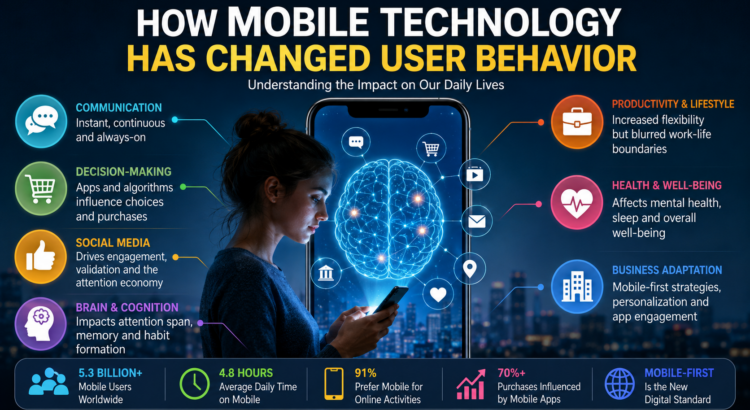
Mobile technology changing user behavior trends graph

How Mobile Technology Has Changed User Behavior: A Deep Dive into Digital Transformation

How Mobile Technology Has Changed User Behavior

Mobile technology has fundamentally reshaped how people think, communicate, shop, learn, and even how they process information. From simple phone calls and SMS to AI-powered apps and always-on connectivity, smartphones have become an extension of human behavior rather than just a communication device. Research from sources like BBC Future and peer-reviewed studies shows that this shift is not only behavioral but also cognitive.

In this article, we explore how mobile technology has changed user behavior, its psychological impact, and how businesses are adapting to this mobile-first world.

The Rise of Mobile-First Behavior

The shift from desktop to mobile did not happen overnight. It evolved as smartphones became affordable, internet access expanded, and apps became central to digital life.

According to insights on mobile behavior trends and app usage patterns, users now prefer mobile devices for almost every online activity—from browsing and shopping to banking and entertainment. Deloitte Digital Mobile App Best Practices

Today, mobile devices are often the first and last thing people interact with each day, shaping habits around constant connectivity.

How Mobile Phones Have Changed the Human Brain

One of the most discussed impacts of mobile technology is its effect on attention span, memory, and cognitive processing. Studies suggest that frequent smartphone use can alter how we focus and retain information.

Research published on medical databases highlights how digital devices influence brain activity, particularly in areas related to attention and reward systems. NCBI Study on Smartphone Cognitive Impact

BBC Future also explains that smartphones have created a habit loop of checking notifications, which trains the brain to seek constant stimulation. BBC Future on Cellphones and Brain Behavior

Over time, this leads to:

  • Reduced attention span
  • Increased multitasking behavior
  • Dependency on instant information
  • Habitual checking of devices

Communication Has Become Instant and Continuous

Before mobile phones, communication was structured and time-bound. Today, it is instant, continuous, and often fragmented.

Messaging apps, social media platforms, and video calls have replaced traditional communication methods. People now expect immediate responses, which has changed social norms significantly.

Key behavioral shifts include:

  • Preference for texting over calling
  • Shorter, more frequent conversations
  • Increased use of emojis and visual communication
  • Constant social presence expectations

This shift has made communication faster but sometimes less deep and more reactive.

Mobile Apps Have Changed Decision-Making

Mobile apps are designed to influence user behavior through personalization, notifications, and recommendations. Businesses use behavioral design to increase engagement and retention.

According to digital strategy research, successful apps focus on simplicity, speed, and personalization to keep users engaged. Deloitte Digital Mobile App Insights

This has led to new behavioral patterns:

  • Impulse buying through mobile shopping apps
  • Algorithm-driven content consumption
  • Reduced patience for slow-loading websites
  • Increased reliance on app-based services (food, travel, banking)

Social Media and the Attention Economy

Mobile technology has amplified the growth of social media platforms, which are built around engagement and retention.

Users now consume content in short bursts through reels, stories, and feeds. This has created what experts call the “attention economy,” where user attention is the most valuable currency.

Behavioral impacts include:

  • Doomscrolling (endless content consumption)
  • Validation-seeking through likes and comments
  • Comparison-driven behavior
  • Reduced long-form content consumption

Impact on Productivity and Lifestyle

Mobile technology has blurred the boundaries between work and personal life. Remote work tools, emails, and collaboration apps ensure that users are always connected.

Positive impacts:

  • Increased flexibility in work
  • Better time management through productivity apps
  • Easy access to learning resources

Negative impacts:

  • Work-life imbalance
  • Digital fatigue
  • Constant notification stress

Health and Psychological Effects

Excessive mobile usage has also raised concerns about mental health and well-being. Studies indicate links between high screen time and anxiety, sleep disruption, and reduced face-to-face interaction.

However, mobile technology also provides mental health benefits through meditation apps, telehealth services, and support communities.

How Businesses Are Adapting to Mobile Behavior

Companies are redesigning their digital strategies to match mobile-first behavior. Key adaptations include:

  • Mobile-first website design
  • App-based customer engagement
  • Push notification marketing
  • AI-driven personalization

Organizations that fail to adapt often lose user engagement and conversion opportunities.

FAQs

1. How has mobile technology changed human behavior?

Mobile technology has made communication instant, increased screen dependency, and changed how people consume information and make decisions.

2. Does mobile usage affect attention span?

Yes, frequent notifications and multitasking can reduce attention span and increase distraction levels.

3. Are smartphones addictive?

Smartphones can create habitual usage patterns due to dopamine-driven feedback loops from notifications and social media.

4. What is mobile-first behavior?

It refers to users preferring smartphones over desktops for browsing, shopping, communication, and entertainment.

5. Can mobile technology have positive effects?

Yes, it improves connectivity, productivity, learning access, and provides tools for health and well-being.

Final Thought

Mobile technology is no longer just a tool—it has become a behavioral framework shaping how humans interact with the world. While it brings convenience, speed, and accessibility, it also introduces challenges related to attention, mental health, and digital dependency.

The key is not to resist mobile technology but to use it consciously. Understanding its influence on behavior helps users and businesses make smarter, more balanced decisions in a mobile-driven world.

Young female cricketers training in a professional talent development program with coaches on a cricket field.

Women’s Cricket Talent Development Programs Around the World: Building the Next Generation of Stars

Women’s Cricket Talent Development Programs Around the World

Women’s cricket has experienced remarkable growth over the last decade. Packed stadiums, professional leagues, increasing media coverage, and rising participation levels have transformed the sport into a global phenomenon. However, behind every successful international player lies a strong talent development system that identifies, nurtures, and prepares future stars.

Today, cricket boards and organizations worldwide are investing heavily in structured pathways, high-performance academies, grassroots initiatives, and leadership programs to strengthen women’s cricket. These programs are not only producing elite cricketers but also creating opportunities for women in coaching, administration, and sports management.

Why Talent Development Matters in Women’s Cricket

The success of women’s cricket depends on a sustainable pipeline of talented players. Grassroots participation introduces girls to the sport, while development pathways provide coaching, competition, fitness training, and mentorship needed to reach professional levels.

Countries with strong talent development structures consistently produce world-class players because they invest in long-term athlete development rather than focusing only on national teams. As women’s cricket becomes increasingly competitive, talent identification and player development have become priorities for cricket boards across the globe.

Australia’s Talent Pathway: A Global Benchmark

Australia is widely regarded as one of the leaders in women’s cricket development. Through Cricket Australia’s structured Talent Pathways system, young players progress from local and state competitions to Australia A squads and eventually the national team. The program includes specialist coaching, sports science support, performance monitoring, and regular training camps.

One of Australia’s biggest strengths is its connection between grassroots cricket, domestic competitions, and international pathways. Players receive consistent support throughout their development journey, ensuring smooth transitions between different levels of competition.

The success of the Women’s Big Bash League (WBBL) has further strengthened Australia’s talent ecosystem. Young players gain exposure to elite coaching and compete alongside some of the best cricketers in the world, accelerating their development. According to the ICC, development squads linked with the WBBL have provided valuable learning opportunities for emerging players from multiple nations.

For more information about Australia’s system, visit Cricket Australia’s official Talent Pathways page: Cricket Australia Talent Pathways

England’s Focus on Diversity and Inclusion

England has taken significant steps to expand access to women’s cricket through inclusive development programs. A notable recent example is the South Asian Cricket Academy (SACA), which launched a dedicated women’s high-performance program aimed at supporting talented British South Asian cricketers who are not yet professionally contracted.

The initiative addresses representation gaps while providing elite coaching, mentorship, and competitive opportunities. Such programs demonstrate how talent development is evolving beyond traditional pathways and becoming more inclusive.

Additionally, the England and Wales Cricket Board (ECB) continues to invest in domestic structures designed to expand participation and strengthen professional opportunities for female cricketers.

Emerging Nations Are Creating New Opportunities

One of the most exciting developments in women’s cricket is the increasing support for emerging cricket nations. Countries that traditionally lacked resources are now receiving greater exposure through international development programs and tournaments.

The International Cricket Council (ICC) launched the Women’s Emerging Nations Trophy to provide high-performance opportunities for developing cricket nations. The tournament is designed to help players gain international experience and accelerate their growth in competitive environments.

Nations such as Thailand, Papua New Guinea, Scotland, the Netherlands, and the United Arab Emirates have benefited significantly from these initiatives. These competitions help bridge the gap between emerging teams and established cricketing powers.

The expansion of the Women’s Emerging Nations Trophy in 2026 further demonstrates the ICC’s commitment to broadening the sport’s global reach.

Leadership Development Beyond the Playing Field

Talent development is not limited to players. Modern cricket recognizes the importance of developing female leaders across coaching, officiating, media, administration, and governance.

The ICC’s 100% Cricket Future Leaders Programme was launched to support women aspiring to leadership roles within the sport. The initiative provides mentorship, networking opportunities, and professional development for emerging female leaders worldwide.

This broader approach ensures that women are represented throughout the cricket ecosystem, creating stronger and more inclusive sporting environments.

Learn more about the initiative here: ICC 100% Cricket Programme

The Role of Franchise Leagues in Talent Development

Women’s franchise leagues have become powerful development platforms. Competitions such as the Women’s Premier League (WPL) and the Women’s Big Bash League provide young cricketers with exposure to elite environments, experienced coaches, and international teammates.

Many cricket experts believe these leagues have accelerated player development more effectively than traditional domestic competitions alone. Players learn professional standards, improve tactical understanding, and gain confidence through high-pressure matches.

Talent identification programs linked to franchise leagues are also helping discover future stars. For example, specialized fast-bowling talent hunts associated with the WPL have attracted hundreds of aspiring players across India.

Challenges Facing Women’s Cricket Development

Despite significant progress, several challenges remain:

Limited Resources in Emerging Nations

Many developing cricket nations still lack sufficient infrastructure, coaching expertise, and funding.

Unequal Opportunities

Professional contracts, domestic competitions, and sponsorship opportunities remain unevenly distributed across countries.

Access to Competitive Matches

Young players in emerging regions often struggle to find regular high-level competition.

Social and Cultural Barriers

In some countries, girls continue to face obstacles when pursuing sports careers, including cricket. The ongoing efforts to support displaced Afghan women cricketers highlight the importance of creating opportunities regardless of circumstance.

The Future of Women’s Cricket Development

The future looks promising. Cricket boards are investing more resources than ever before, while the ICC continues to expand international development initiatives. High-performance academies, leadership programs, franchise leagues, and global tournaments are creating a stronger pathway for future generations.

Technology, sports science, and data analytics are also becoming integral parts of player development. Young athletes now have access to resources that were previously available only to elite professionals.

As participation continues to grow worldwide, talent development programs will play a crucial role in ensuring that women’s cricket remains competitive, diverse, and sustainable.

FAQs

What is a women’s cricket talent development program?

A women’s cricket talent development program is a structured system that helps identify, train, and support young players through coaching, competitions, fitness programs, and mentorship opportunities.

Which country has the best women’s cricket development pathway?

Australia is often considered a global leader due to its well-structured talent pathways, strong domestic competitions, and successful transition programs from grassroots to international cricket.

How does the ICC support women’s cricket development?

The ICC supports women’s cricket through leadership initiatives, development squads, emerging nation tournaments, coaching programs, and global growth strategies.

Why are franchise leagues important for women’s cricket?

Franchise leagues provide elite competition, professional coaching, financial opportunities, and exposure to international players, helping accelerate player development.

What challenges still exist in women’s cricket?

Funding limitations, unequal opportunities, infrastructure gaps, and social barriers continue to affect women’s cricket development in several regions worldwide.

Final Thoughts

Women’s cricket is no longer simply growing—it is evolving into a truly global sport. The success of Australia’s talent pathways, England’s inclusive development initiatives, and the ICC’s expanding support for emerging nations demonstrates how strategic investment can transform the game. As more countries build structured pathways and professional opportunities, the next generation of female cricketers will emerge from a wider range of backgrounds and regions than ever before. The continued expansion of talent development programs will ultimately determine how far women’s cricket can reach in the coming decades.